China Inbound Daily: Zhangjiajie Up 20%, Brazil Up 358%
- Share
- publisher
- Sam
- Issue Time
- Oct 14,2026
Summary
China inbound briefing for 14 October 2026: Zhangjiajie inbound visitors up 20.47% with foreign exchange up 40%, Shanghai at a record half-year, Europe up 150.7% and Brazil the fastest-growing source market at 358.5%.
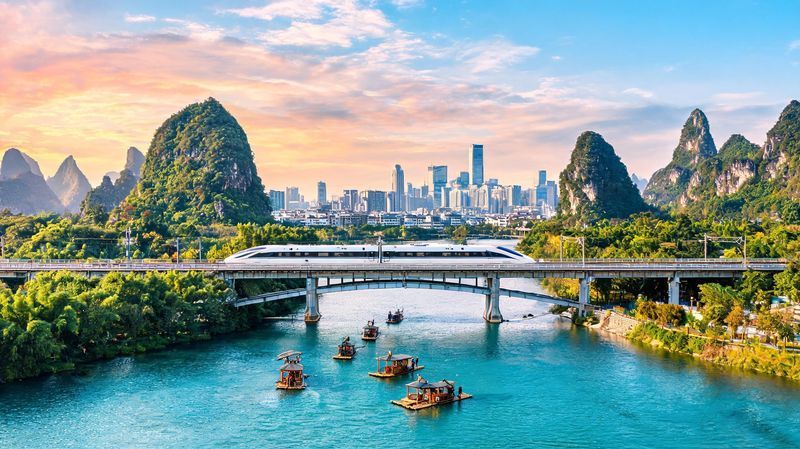
China Inbound Daily — 14 October 2026
Six data points shaping China's inbound travel market this fortnight, with what each one means for travellers planning a trip.
Zhangjiajie: inbound visitors up 20.47%, foreign exchange up 40%
Official Zhangjiajie figures for January to August 2026 show 994,500 inbound visitors, up 20.47% year on year, and US$109.6 million in tourism foreign exchange earnings, up 40%. The source market list now covers 192 countries and regions, against 188 a year earlier, with especially strong growth from the United States and Russia.
What it means: the story is in the structure rather than the volume. Foreign exchange earnings are growing at roughly twice the rate of arrivals, which suggests a shift from a volume destination to one that keeps visitors longer and sells them more - photography, wellness, study travel and higher-grade accommodation.
Shanghai posts a record half-year, and a warning about the next stage
Shanghai hosted 5.315 million inbound visitors in the first half of 2026, up 27.8% and a record for the period. Russian arrivals grew 132%, the fastest of any source country. A research paper from the Chinese Academy of International Trade and Economic Cooperation concludes that Shanghai is approaching the limit of growth available under current conditions, and that the next phase depends on converting visitors into spenders and spreading arrivals into the wider Yangtze Delta.
What it means: gateway cities are switching from attracting arrivals to converting consumption. Nationally, 22.91 million foreign visitors arrived in the first half, up 20.4%, of whom 77.7% entered visa-free - yet per-visit spending of US$357.3 is only 29.1% of the global average. The volume ceiling is near; the value gap is the real opportunity.
Summer redrew the source map: Europe up 150.7%, Brazil up 358.5%
Ctrip data reported by The Globe shows the ten largest summer source markets as Russia, South Korea, the United States, Malaysia, Thailand, Canada, the United Kingdom, Singapore, Australia and Spain. Growth, however, came from elsewhere: Europe as a whole rose 150.7%, led by Switzerland (+234.7%), Spain (+233%), Italy (+163%) and France (+135%). Brazil grew 358.5%, the fastest of any market monitored, and Mexico grew more than 150%. In the first half, bookings from Spain, France, Belgium, Italy and the Netherlands all more than doubled.
What it means: source diversification has moved from a talking point to the actual composition of demand. The service side has to keep up: more multilingual guides, longer itineraries for long-haul visitors, and the ability to handle bookings that arrive days before departure.
The ASEAN corridor sets records, and adds a new route
At the 23rd China-ASEAN Expo tourism section in Guilin, the Ministry of Culture and Tourism reported that two-way visits between China and ASEAN exceeded 45 million in 2025, up 14.2%. Vietnamese visitors to China passed 7 million, a record, while Chinese first-stop visits to Vietnam exceeded 25 million. 2026-2027 has been designated a China-Vietnam tourism cooperation year, and a new Shanghai-Ho Chi Minh City service began in mid-October with seven weekly flights.
What it means: ASEAN is the most predictable growth pole in China's inbound base. For visitors, the practical implications are land-border crossings in Guangxi and Yunnan, more weekend city breaks, and cross-border rail products - all of which reward early booking.
Supply is moving inland: tier-4 and tier-5 city hotels grew 46-48%
Ctrip reports 139,000 domestic hotels taking inbound orders in the first half of 2026, up 33.6% year on year. Hotels in tier-4 and tier-5 cities grew 46.2% and 47.9% respectively - well ahead of the national average - and platform destination coverage added nearly 100 cities.
What it means: the gateway-to-hinterland system is moving from concept to delivery. The summer's fastest-rising cities (Qianxinan, Xiangxi, Heihe, Qinhuangdao, Huzhou, Altay, Shangrao, Qiandongnan, Ordos, Jinan) point to a market spreading beyond a handful of gateways - and to a window of two to three years for those destinations to get multilingual signage, card acceptance and tax-refund counters in place.
Marketing has moved to the source countries: Gulf visitors doubled
China exhibited for the third consecutive year at Arabian Travel Market in Dubai in September, with one of the largest Asian pavilions. Visitors from the six Gulf states exceeded 150,000 in 2025, up 100.78%, with Saudi Arabia up 110% and the UAE up 113%. Ctrip has also partnered with Jackie Chan to promote Chengdu, Guilin, Luoyang, Dali and Dunhuang internationally, while Shanghai Pudong's free half-day tour programme has now served more than 30,000 travellers from around 130 countries.
What it means: the Gulf markets are small in volume and top of the range in spend - five of the ten highest-value source markets. That fits China's high-end hotel, theme park and luxury experience supply, and suggests marketing budgets will keep shifting from domestic channels to localised work in source countries.
Frequently Asked Questions
What does this mean if I am planning a China trip now?
The practical effect is earlier sell-outs on popular routes and fixed-capacity experiences. Book the pieces that cannot be bought late - timed museum entries, rail seats on fixed dates, park permits - before the rest of the plan. Our season calendar covers the pressure points.
Are the newer source markets changing what is available?
Yes, gradually: more multilingual guiding, more long-stay itineraries and more photography, food and wellness routes. Small-group departures fill earlier than they did a year ago.
How does ChinaTravelPlus use this data?
We watch arrivals and booking trends to decide which routes to build and how early to hold inventory. See how our planning model works.
About the Author — Sam · Custom Travel Planner
Sam plans semi-self-guided and private China trips one to one, and writes our daily inbound-travel briefing from official and platform data.
Planning Around These Trends
We design the route, arrange the bookings and stay reachable while you travel - how semi-self-guided planning works →
Email Sam for private itineraries, or Luppy for groups of ten and above.
More Than Travel. It's the Plus That Matters.