Yi Torch Festival 2026: Complete Guide to China's Most Spectacular Fire Celebration
- Share
- publisher
- Sam@cnTravel+
- Issue Time
- Apr 19,2026
Summary
Experience the Yi Torch Festival in Chuxiong, Yunnan - China's largest fire celebration with 1000+ years of history. Complete guide with dates, activities, cultural insights, and travel tips.
Key Takeaways
- The Yi Torch Festival is one of China's four largest ethnic minority celebrations, with over 1,000 years of history
- 2026 festival dates: July 14-16 (Gregorian calendar), corresponding to the 24th-26th day of the sixth lunar month
- Main venue: Chuxiong Yi Autonomous Prefecture, Yunnan Province
- Core experiences include torch parades, bonfire celebrations, traditional Yi singing and dancing, and wrestling competitions
- The festival represents Yi people's fire worship culture and symbolizes driving away evil and welcoming good fortune
- Visa-free entry to China makes this an accessible cultural experience for international travelers
Content Outline
- Introduction: The Magnificent Fire Celebration
- The Historical Origins of Yi Torch Festival
- 2026 Festival Dates and Location Details
- The Grand Torch Parade and Bonfire Rituals
- Traditional Yi Cultural Performances
- The Exciting Wrestling Championships
- Experiencing Local Yi Cuisine
- Practical Travel Guide for International Visitors
- What to Bring and Wear
- Final Tips for an Authentic Experience
The Magnificent Fire Celebration
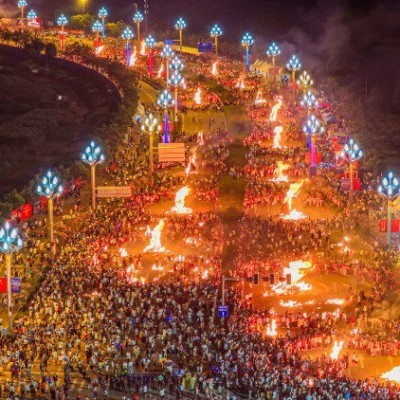
Every summer, as the Yi ethnic group in China's Yunnan province celebrates their most sacred festival, the night sky transforms into a canvas of blazing torches and dancing flames. The Yi Torch Festival—known as "Chenghuo Jie" in Mandarin Chinese—stands as one of China's most spectacular fire celebrations, drawing hundreds of thousands of visitors to the mountains of Chuxiong for an unforgettable cultural experience that has endured for over a millennium.
For international travelers seeking authentic Chinese cultural experiences beyond the Great Wall and Forbidden City, the Yi Torch Festival offers something truly extraordinary: a living, breathing celebration where ancient traditions come alive through fire, music, dance, and community. This comprehensive guide will walk you through everything you need to know to experience China's most magnificent fire celebration in 2026.
The Historical Origins of Yi Torch Festival
The Yi Torch Festival traces its roots back over 1,000 years to the Tang Dynasty (618-907 CE), making it one of China's oldest continuously celebrated ethnic festivals. According to Yi mythology, the festival commemorates the legendary hero Zhypa, who used fire to defeat demonic forces that threatened his people. This victory through flame established the central role of fire in Yi cultural identity and spiritual practice.
The Yi people, one of China's 55 ethnic minorities with a population of approximately 9 million, have maintained their unique fire worship traditions through millennia of social change. Fire represents more than just light and warmth to the Yi—it embodies courage, prosperity, and the spiritual connection between heaven and earth. During the festival, families ignite torches at their doorsteps to honor their ancestors and invoke blessings for the harvest season ahead.
2026 Festival Dates and Location Details
When to Visit:
The 2026 Yi Torch Festival will be celebrated from July 14 to July 16 in the Gregorian calendar. These dates correspond to the 24th through 26th day of the sixth lunar month, when Yi communities across Yunnan traditionally gather for their most important annual celebration.
Where to Go:
The Chuxiong Yi Autonomous Prefecture serves as the primary festival venue, located approximately 150 kilometers (95 miles) west of Kunming, Yunnan's provincial capital. Chuxiong has invested significantly in tourism infrastructure to accommodate the massive influx of visitors during the festival period, making it increasingly accessible for international travelers.
The main celebration grounds feature multiple venues hosting different aspects of the festival, from the grand opening ceremony at the Yi Cultural Square to the traditional wrestling arenas and overnight bonfire celebration sites.
The Grand Torch Parade and Bonfire Rituals
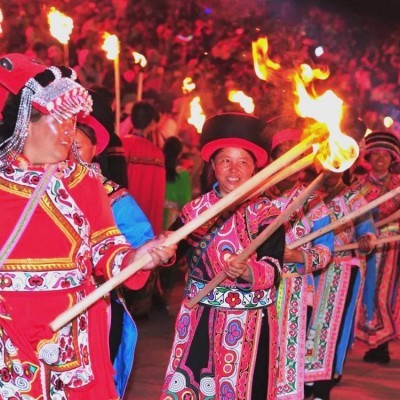
The visual spectacle of the Yi Torch Festival begins with the grand torch parade, where thousands of participants carrying traditional bamboo torches lined with resin-soaked pine wood march through the streets in a river of living fire. Each torch can burn for hours, casting flickering orange light across the faces of excited onlookers gathered along the parade routes.
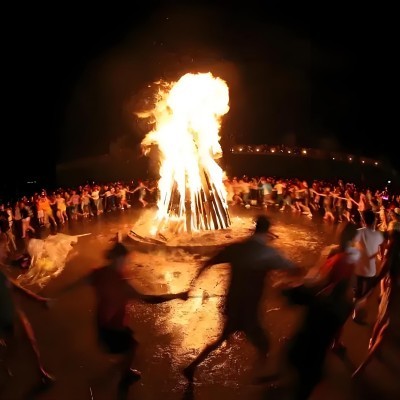
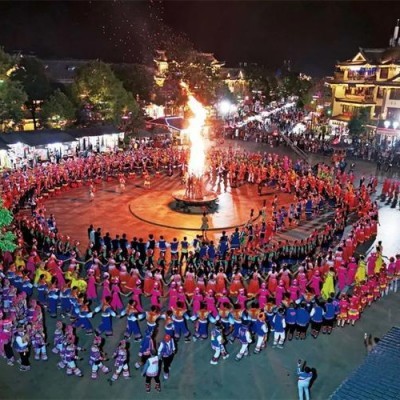
As evening falls, the individual torch processions converge at the main celebration ground, where participants collectively ignite a massive central bonfire. This moment represents the spiritual heart of the festival—the unity of individual flames into a single, powerful blaze that symbolizes community strength and shared hopes. The bonfire typically reaches heights of 10-15 meters (33-50 feet), creating an enormous cone of flame visible across the valley.
Around the central bonfire, traditional Yi dances begin spontaneously. Men and women form circles, linking hands and moving to the rhythm of traditional instruments including the lusheng (a reed pipe instrument) and three-stringed guitars. International visitors are warmly welcomed to join these dances—a rare opportunity to participate directly in ethnic minority cultural traditions.
Traditional Yi Cultural Performances
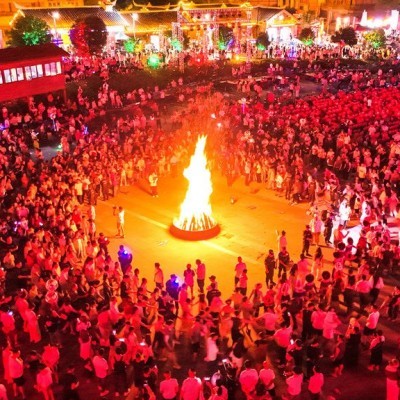
Beyond the fire ceremonies, the Yi Torch Festival showcases the rich artistic heritage of the Yi people through daily cultural performances. The festival grounds feature dedicated stages where Yi singers perform traditional songs, many of which have been passed down through oral tradition for generations.
The Naxi ancient music performance held during the festival is particularly noteworthy—a UNESCO-recognized intangible cultural heritage presentation that features classical Chinese instruments played according to centuries-old traditions. This unique musical experience combines Yi, Naxi, and broader Chinese classical influences.
Traditional Yi dances, including the bull horn dance and peacock dance, tell stories of daily life, courtship, and spiritual beliefs. Costumed performers move with remarkable grace, their elaborate silver headdresses catching firelight as they spin and leap in synchronized formations that have been rehearsed throughout the year specifically for this celebration.
The Exciting Wrestling Championships
For sports enthusiasts, the Yi Torch Festival's traditional wrestling competitions offer authentic cultural experiences rarely available to international travelers. Yi wrestling, known as "guolian," follows rules and techniques distinct from international freestyle or Greco-Roman wrestling, with competitors wearing distinctive leather harnesses around their necks.
The wrestling ground hosts preliminary rounds throughout the festival, culminating in championship matches on the final afternoon. Champions earn significant local prestige and often substantial cash prizes. Watching these athletic competitions provides insight into the physical culture and competitive spirit that has been integral to Yi society for centuries.
The wrestling arena also serves as a social gathering space where spectators share food, drink, and stories. International visitors are often invited to participate in less formal wrestling activities or simply to observe and interact with local competitors and fans.
Experiencing Local Yi Cuisine
No cultural festival experience is complete without sampling local cuisine, and the Yi Torch Festival offers excellent opportunities to taste authentic Yi dishes. The festival grounds and surrounding streets feature numerous food vendors offering traditional specialties at affordable prices.
Must-try Yi dishes include:
- Tsukue (苦荞粑粑): Baked buckwheat cakes, often served with honey—a traditional Yi staple food
- Yak meat skewers: Tender, flavorful yak meat grilled over charcoal
- Yi-style hot pot: Regional variations featuring local vegetables and meats
- Qiangjiu (荞麦酒): Buckwheat wine, a traditional Yi alcoholic beverage
- Grilled goat cheese: A highland specialty with distinctive smoky flavor
Street food vendors throughout the festival area offer smaller portions ideal for sampling multiple dishes. Prices are typically reasonable, though cash may be necessary as some vendors do not accept mobile payment.
Practical Travel Guide for International Visitors
Getting to Chuxiong:
From Kunming, travelers can reach Chuxiong by several options:
- High-speed train: The most convenient option, with journey times of approximately 1-1.5 hours and fares around 50-80 CNY ($7-11 USD)
- Long-distance bus: Slower but cheaper, approximately 2-3 hours journey time
- Private transfer: Available through tour operators for those preferring door-to-door service
Chuxiong itself is walkable from the train station to the main festival areas, though shuttle buses operate during the festival period for visitor convenience.
Accommodation:
Festival period accommodation books quickly and prices increase significantly. Booking in advance is essential:
- Chuxiong city hotels: Range from budget options (200-400 CNY/night) to international chain hotels (600-1200 CNY/night)
- Near the festival grounds: Higher prices but maximum convenience
- Kunming as a base: More accommodation options and potentially cheaper, with day trips to Chuxiong possible
Best Time to Visit:
While the official festival runs July 14-16, many preparatory events and smaller celebrations occur in surrounding days. Consider arriving 1-2 days early to explore the Yi Cultural Museum and experience less crowded festivities.
What to Bring and Wear
Essential items for the festival:
- Comfortable walking shoes (you will walk extensively)
- Light, layered clothing for summer temperatures that drop at night
- A light jacket or sweater for cooler mountain evenings
- Sunscreen and hat for daytime activities
- Cash (some vendors, small performers may not accept cards or mobile payment)
- Portable phone charger (essential for capturing photos and videos)
- Basic Mandarin phrases or a translation app (while some locals may speak English, Mandarin is predominant)
What to wear:
Yi communities appreciate visitors who dress respectfully. Avoid overly revealing clothing. Wearing bright colors is encouraged and aligns with the festive atmosphere. Some visitors choose to rent or purchase Yi-style clothing from vendors, which can enhance cultural immersion and create memorable photographs.
Photography tips:
The evening fire ceremonies offer incredible photography opportunities. Bring a smartphone or camera with good low-light performance. A small tripod can be invaluable for capturing the bonfire celebrations without blur.
Final Tips for an Authentic Experience
The Yi Torch Festival offers international travelers a rare window into China's remarkable ethnic diversity. Beyond the spectacular fire ceremonies and cultural performances, take time to:
- Engage with local Yi families who often welcome visitors into their homes during the festival
- Learn a few Yi phrases—even basic greetings are warmly received
- Participate rather than just observe—join the dances, accept invitations to share food
- Respect local customs—ask before photographing individuals, particularly in traditional dress
- Explore beyond the main venue—smaller village celebrations offer more intimate experiences
The festival's magic lies not just in its visual spectacle but in its living cultural continuity. You are witnessing traditions maintained for over a millennium, adapted to modern times while preserving their essential spirit.
🎯 Plan Your Yi Torch Festival Adventure
Ready to experience China's most spectacular fire celebration? Our expert travel specialists have guided hundreds of international visitors through Yunnan's most authentic cultural experiences, including exclusive access to traditional Yi ceremonies rarely available to independent travelers.
📧 Contact Our Travel Specialists
🌐 Visit ChinaTravelPlus.com